OSCE office for Democratic intitutions and Human Rights (ODHIR) supports participating states by reviewing their law-making systems and relevant draft and exisiting legislation
ODIHR supports legal reform in participating States by reviewing, upon request, individual pieces of draft or existing legislation to assess their compliance with OSCE commitments, international human rights standards and established good practices […]
See documentsGood and effective legislation is the foundation of every functioning state based on the rule of law. Laws should be adopted through democratic procedures and be clear and concise.
See the Legal OpinionsIn this section you can find all legislative guidelines developed by ODIHR to assist participating States in formulating legal frameworks that comply with OSCE commitments and other international standards. Guidelines provide good practice examples in their respective […]
Go to the guidelinesOr choose the most viewed:
Or choose the most viewed:
Need special assistent with creating legal review or assessments? We are an expert in that!
Can’t find what you are looking for? Ask us for help. This is what we do. ODIHR Legal Reviews, Assessments are our work that... here we need to place short promotional/marketing description what ODIHR can do. Here we need to place short promotional/marketing description what ODIHR can do.
Here we need to place short promotional and marketing description what ODIHR can do..Can’t find what you are looking for? Ask us for help. This is what we do. ODIHR Legal Reviews, Assessments are our work that...
Ask a question




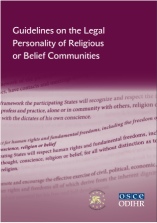
The purpose of these Guidelines is to ensure that those involved in drafting and applying legislation in the area of the freedom of religion or belief, including civil society representatives, have at their disposal a benchmark document containing minimum international standards in the area of recognition of religious or belief communities. The document does not seek to challenge established agreements between states and religious or belief communities but, rather, to delineate the legal framework that would ensure that communities wishing to do so have a fair opportunity to be granted legal personality, and that the criteria established are applied in a non-discriminatory manner.
The purpose of these Guidelines is to ensure that those involved in drafting and applying legislation in the area of the freedom of religion or belief, including civil society representatives, have at their disposal a benchmark document containing minimum international standards in the area of recognition of religious or belief communities. The document does not seek to challenge established agreements between states and religious or belief communities but, rather, to delineate the legal framework that would ensure that communities wishing to do so have a fair opportunity.
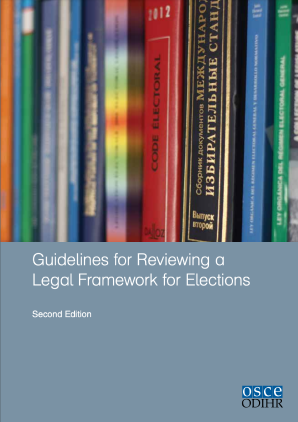
The purpose of these Guidelines is to ensure that those involved in drafting and applying legislation in the area of the freedom of religion or belief, including civil society representatives, have at their disposal a benchmark document containing minimum international standards in the area of recognition of religious or belief communities. The document does not seek to challenge established agreements between states and religious or belief communities but, rather, to delineate the legal framework that would ensure that communities wishing to do so have a fair opportunity to be granted legal personality, and that the criteria established are applied in a non-discriminatory manner.
See all


